New HPE Curriculum Links for School Camps in Victoria
Planning your next school camp in Victoria just got even easier.
This page maps the Bouldering activity to the Australian Curriculum: Health and Physical Education (HPE). Teachers can print or save it as a PDF for lesson planning.
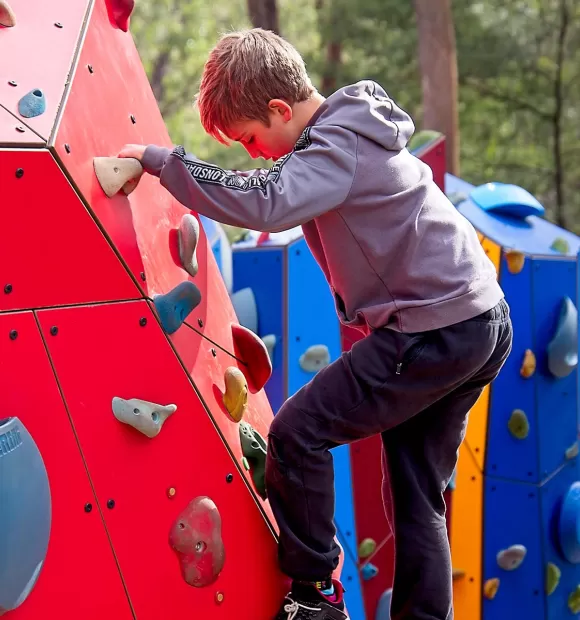
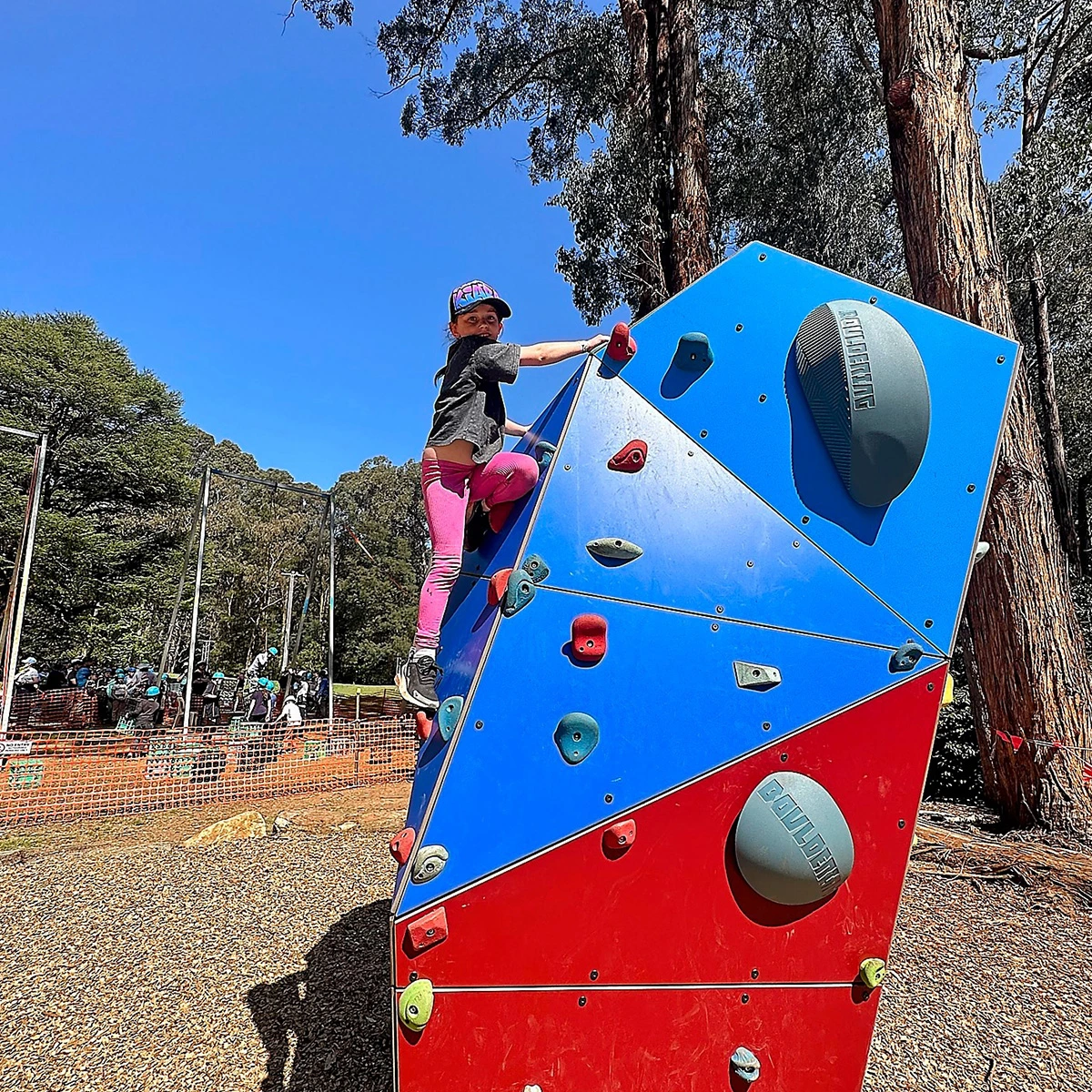
Activity: Bouldering is a climbing-based activity completed on low walls or natural rock, without ropes but above crash mats, focusing on balance, coordination and problem-solving. Delivered by Scout Adventures instructors.
Mapped for Years 5–6 and Years 7–8. Applicable to both indoor and outdoor bouldering environments.
| Curriculum content description (HPE) | How the activity links | Sample session feature |
|---|---|---|
| Practise and apply specialised movement skills in a variety of situations (v9: AC9HP6M04) | Students practise balance, grip, and movement sequencing, developing body control while navigating holds and routes. | Progressive routes with varied angles; focus on efficient body movement and smooth transitions. |
| Investigate and apply movement concepts related to effort, space, time, objects and people (v9: AC9HP6M03) | Students explore how centre of gravity, reach, and pacing affect success and endurance. | Slow-climb drills; experimenting with different movement sequences. |
| Demonstrate ethical behaviour and fair play that aligns with rules (v8.4: ACPMP069) | Students practise spotting, take turns, and follow safety rules respectfully, supporting peers’ attempts. | Partner spotting practice; discussion on trust and support. |
| Apply critical and creative thinking to generate and assess solutions to movement challenges (v8.4: ACPMP068) | Students analyse route problems and test multiple solutions to complete a climb successfully. | “Problem solving” routes requiring lateral thinking and route planning. |
| Curriculum content description (HPE) | How the activity links | Sample session feature |
|---|---|---|
| Analyse and refine movement skills in a variety of movement situations (v9: AC9HP8M01) | Students refine climbing sequences for efficiency and balance, adjusting grip and foot placement based on feedback. | Peer analysis of technique; reflection on efficient movement patterns. |
| Demonstrate and explain how movement concepts (effort, space, time, objects, people) can be manipulated to improve outcomes (v9: AC9HP8M03) | Students experiment with route pacing, hold selection, and rest strategies to improve control and endurance. | Timed climbs; endurance challenges focusing on control and recovery. |
| Plan and implement strategies for connecting to natural and built environments to promote health and wellbeing (v9) | Students reflect on how bouldering supports wellbeing through focus, resilience and connection with environment. | Reflection on mental and physical challenge and mindfulness through climbing. |
| Select, use and refine strategies to support inclusion, fair play and collaboration (Achievement standard link) | Students support and encourage peers of varying abilities, providing constructive feedback and ensuring safety. | Inclusive group problem-solving sessions; peer coaching and shared learning. |
Before the activity: Introduce bouldering safety, crash mat usage, and spotting techniques. Discuss problem-solving and goal setting.
During the activity: Encourage students to analyse and test multiple route solutions while working collaboratively and maintaining spotting safety.
After the activity: Reflect on how perseverance, planning and technique improvement support wellbeing and confidence.
This activity supports the Movement & Physical Activity and Personal, Social & Community Health strands for Years 5–8.
Need this page as a PDF or curriculum alignment for another activity? Email enquiries@scoutadventures.com.au.